.png)
The Trichological Society
Orthodox Hair-sciences & Hair-specialisms - Worldwide
Trikhos Gr. n. - Hair, lójik'l Gr. adj. - pertaining to the doctrine of
Head Office: 1 Kings Mews • Bloomsbury • London WC1N 2JA
08707 666 996
About TTS | Consultant Practitioners Listings Worldwide | Contact | Join the Society | Media | Members Professional Services | Site Content
——————————————————————————————————————
TTS is a professional and academic body with an international reputation and a membership which includes many of the world's most respected academics in the field of hair-sciences. TTS Faculty of Pure -Trichology offers this academically demanding home-study diploma course to students with ability and tenacity. Qualification (LTTS) will take 2-4 years of study for all except students with a recognised medical degree. All students are examined individually by TTS personnel from London.
TTS has been informed that a letter is apparently circulating in S Korea stating that TTS is awarding it's coveted Diploma in Pure -Trichology to students who undergo a '36 hour' course of study. This ridiculous claim is totally untrue and clearly orchestrated by some nameless person in a feeble attempt to undermine TTS academic standing.
EDUCATION
The Society's Faculty in Pure Trichology offers distance learning courses to:
• Orthodox Medical Practitioners seeking to acquire The Society's Diploma in Pure Trichology
• Post-Graduates in other appropriate sciences (e.g. medical herbalism, homeopathy, human biology, pharmacy etc)
• Persons with sound educational backgrounds, high intellect, tenacity and determination please read on.
Trichology as an academic and practical para-medical science
The study and professional practice of the para-medical/scientific discipline of trichology at this qualification level is unique.
TTS graduates are academic trichologists. They should not be confused with others masquerading as experts whose sole 'qualification' has been a basic introduction to hair science during a hairdressers/beauticians course, or via a course of study in elementary trichology, or the many with no formal training whatsoever.
Whilst trichology remains unregulated, charlatans will continue to prosper.
The Society's course in pure trichology is set at a high standard. Prospective students must possess proven ability in appropriate science subjects. Many have first degrees.
Once qualified, practitoners are entitled to registration and listing with TTS. Registration requires the practitioner to obey a Code of Ethics and Professional Practice Guidelines. The Society will act rigorously against any who breach its trust and compromise its position.
Hairloss is an age-old problem with evidence suggesting the Ancient Egyptians actively sought treatments for it. In the1860's a pioneering form of hair-care science commenced in a London barber's shop under a certain 'Professor' Wheeler. By the 1900's this new science had assumed the name - Trichology (a derivation of the Old Greek noun 'trikhos' - hair, and 'ology' - the science of).
Many institutions promoting trichology have (ill-advisedly in our opinion) maintained a close and seemingly un-severable relationship with its barber's shop roots and failed to elevate its academic status to the level required for acceptance as a credible para-medical science.
The public, the legal profession and the courts, the media and medical professions continue to regard the majority of hairdresser-trained ‘trichologists’ as 'expensive charlatans' - This situation will not change whilst basic trichology is included in practical hairdressing courses or thereafter - enabling posturing in a specialism patently outside the normal field of 'dressing or chemically-treating hair'.
TTS emphasizes and academic institutions must accept that hairdressing (a practical craft) has no relationship with TTS level trichology (an academic paramedical scientific discipline) and that TTS graduate trichologists are not hairdressers.
TTS would never wish to denigrate the artistic skills and services of the hairdressing craft which brings joy to millions. However hairdressing is just that. Trichology is an academic paramedical scientific discipline. The world justifiably expects paramedical/scientific professionals to be highly trained individuals of integrity.
TTS is an established academic body dedicated exclusively to orthodox hair-sciences. It includes a faculty of pure trichology which covers the varied aspects of its wide field at the highest level.
TTS Faculty in Pure Trichology offers its course (set at UK degree standard) to students with evidence of sound academic ability who wish to qualify at the highest level currently available within this unique para-medical/scientific profession.
Qualification will take 2-5 years.
-------------------------------
Course Overview
The Trichological Society regards the practice of trichology as a paramedical discipline (but exclusively of the hair and scalp). It provides high level education in the specialty via its 'Open University' style faculty in Pure Trichology (UK degree level).
Student admission standards: 'Advanced Level' school leaving certificates (or equivalent) and above.
Currently 94% of students have first degrees and above.
The Society may also consider mature students on individual merit.
This course is currently attracting mature students from:
Africa, America, China, Cyprus, Denmark, India, UK, USA
English speaking students - worldwide are welcome.
--------------------------------------------------------------
Training as a trichologist with The Trichological Society
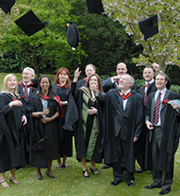
The Society's Graduation Day
Prospective UK Students and interested party's please read the following:
Join The Society Course Syllabus Students Pages
Prospective Non UK Students and interested party's please read the following:
Join The Society Non-UK Course Syllabus Students Pages
------------------------------------------------------------------------------
General information + The Curriculum.
Students must be members of The Society. To apply for Student Membership please Click here
The Society's Faculty in Pure Trichology is open to all English speaking people.
QUALIFICATION - The Trichological Society's standards.
The Society conducts the 'pure trichology' element of the course. The standards to be achieved are the highest within this discipline and will usually take 2-5 years of serious study.
The Society's graduate Trichologists are highly trained specialists. To be amongst the best requires dedication and perseverance.
Please read all the student material published on this web site
Applicants should ascertain the legal position with regard to the practice of trichology in their Country /State prior to the commencement of study.
Applicants will initially establish their educational standing with The Society.
Ideally the course will be of two-three year's duration (this can be extended by arrangement), with continuous assessment and credits accruement.
Students with degrees in appropriate subjects may take less time to qualify (Please confer with the Registrar).
CREDITS TO BE EARNED
Trichology is an academic and practical science. For qualification as a licentiate of The Society (LTTS) the student will acquire not less than 130 credits which will accede to the following criteria:
The Academic Assignments: the requirement is an obligatory 70 credits (less where a medical or paramedical science degree is possessed.
The Practical Experience: the requirement is an obligatory 30 credits.
Up to 10 Credits may be awarded for impressive aptitude and attitude demonstrated at tutorials and seminars etc.
Final dissertation up to a maximum of 20 credits.
Final year Viva Voce examination: up to a maximum of 15 credits.
Success will therefore be based on an individual's performance throughout the course.
ASSIGNMENTS (maximum of 1 Credit each) are:
One required every two-weeks (not during December and August) - a maximum of 20 assignments per year.
To be presented by e-mail direct to the tutor.
To be extensive academically stimulating works containing at least the required numbers of words.
To be researched using Internet, libraries, textbooks and written up in your own words.
To contain explanations of all scientific/medical words and terms used.
To include Bibliography (references to any authors whose work may be involved).
SYLLABUS
The Society's Pure Trichology course covers human anatomy and physiology, with in-depth study of the skin and hair together with the etiology, diagnosis, prognosis and treatments available for its specific diseases/disorders including: alopecia areata totalis and universalis, ringworm, androgenic and genetic alopecias, trichorrhexis, trichotillomania, hirsutism, hypertrichosis, canities, 'seborrhoeic dermatitis, ' hair fall associated with fever, folliculitis Decalvans, pseudo pelade, eczemas, impetigo, trichomycosis nodosa, leucotrichia, lichen planus, lupus erythematosus, post natal alopecia, monilethrix, myxoedema and hairfall, neurodermatitis, pediculous capitis, pemphigus, pityriasis, psoriasis, plica polonica, traction alopecia, trichokinesis, urticaria, hair damage due to chemical procedures etc.
Also Microscopy, clinical protocol and clinical equipment. Hair restoration surgery. Endocrinology and pharmacy as applicable. Expert witness testimony and report writing. Clinical consultation procedures, diagnosis and treatment as applicable to pure trichologists in professional practice. Practice management. (Certain of these subjects can only be satisfactorily studied in a clinical environment). Hairdressing chemistry (student trichologists are also expected to spend time as an observer within a reputable hairdressing salon)
DISSERTATIONS
The final year dissertation shall be of 8000+ words embracing a pure trichology subject of the student's choice (max. 20 Credits). Dissertations are appraised by outside examiners of appropriate academic standing appointed by The Society.
PRACTICAL STUDIES
All students are expected to participate in at least 24 working day practical sessions in pure trichology per year at a recognised clinical/training establishment throughout the duration of the course (Credits = 1 per session) Validation is required for credits award. North American students now have the opportunity to attend the trichology centers of Dr D Kingsley PhD LTTS at Manhattan and Staten Island.
As many students will not have access to a trichology practice recognised by The Society., they should seek an alternative source acceptable to The Society e.g. a Hospital or other Dermatology Unit (please provide contact details). If this is not available the experience may be acquired in London over a 2 week intensive period during May of the final year of study immediately prior to the examinations and graduation Day (see The Final Year - below).
OBSERVATIONAL STUDY
Hairdressing Observation (minimum 10 hours) within the student's local hairdressing salon is required during the period of study (details should be submitted). Subject matter: Chemical permanent, relaxing, straightening, colouring, bleaching etc.
The Society will require verification that this requirement has been honoured.
THE FINAL YEAR - students visit London
The Society requires each student to visit London UK for a minimum period of two weeks of study in May. Tutorials will include the following subjects viz:
Pure trichology discussion forums and tutorials.
Clinical consultation procedures, diagnosis and treatment as applicable to pure trichologists in professional practice.
Work experience in specialist practices.
Expert witness testimony and report writing.
Practice management etc.
The final Viva examination.
Presentation of Diplomas to successful students.
ACCOMMODATION (to be funded by the student) may be arranged via The Society at a local Private Hotel or the more affordable YMCA Hostel local to TTS Center.
YMCA Hostel - 7 nights with single room, shared bathroom, with two meals per day = £120.00 sterling.
Private Hotel by quotation (please e-mail the Registrar).
TUTORS (to be assigned)
Each will be appropriately qualified and experienced.
.
RECOMMENDED TEXTBOOKS
Gray's Anatomy (Barnes & Noble) or other reputable Anatomy and Physiology volume.
Disorders of Hair Growth Diagnosis and Treatment by Elise A Olsen (2nd Edition)
Diseases of the Hair and Scalp (Rodney Dawber)
The Illustrated Medical Dictionary (Harper Collins).
The Internet should be regarded as the primary research facility.
STUDY ASSISTANCE (via e-mail): Anytime with Tutor - or where appropriate with TTS Office.
NON UK STUDENTS: The Society provides special facilities. Please Click here
CONTINUING PROFESSIONAL DEVELOPMENT
The Society encourages its graduates to maintain, update and share knowledge and experiences via attendance's at the regular Continuing Professional Development Seminars (four or more held annually). Members are also encouraged to assist each other by the exchange of information.
Please note
If you wish to discuss student membership and entry onto the course please contact the Registrar.
"Whatever you can do, or dream you can do, begin it. Boldness has genius power and magic in it." -Goethe