A detailed overview of this prestigious trichology course
FOR STUDENTS WITHOUT MEDICAL QUALIFICATION
As revised by the Governors 14-04-2023
Welcome to this extensive course overview.
We have during the past 23 years provided academically advanced, courses in Trichology (the science of Human Scalp & Hair in Health, Disease and Distress) to medical doctors and to candidates without such medical qualification worldwide who possess tenacity, determination to succeed and a command of the English language.
(You may wish to view the Testimonials page).
The extensive highly regarded course described on this page is for candidates who are not medical doctors but want to qualify as trichologists.
If you are a prospective candidate seeking (for your own reasons) a trichology course set at the highest academic level currently available world-wide and possess the determination and tenacity to see such a course through to completion this course may be of interest to you.
This ‘Open University style’ course provides the vehicle to qualification as a Trichologist within the parameters of TTS (The Trichological Society). Graduands will be elected to Licentiateship and be entitled to use the post-nominal letters LTTS. Our Graduates can also request inclusion on the TTS portal (this is subject to annual invitation and receipt of the required modest membership subscription).
The course which has been unofficially validated as Master’s Degree level is research based. There are 60 + written essays + some additional assignments + practical sessions / one-to-one tutorials / each year.
The course spans 3 academic years – each is of 10 months duration as August and December are vacation months. However this course can be completed in 2 years by candidates who have both urgency and the additional time required.
The 3 year duration course:
During each 10 month year of the course (August and December are closed months) the candidate is contracted to research, write-up and submit 20 assignments from the published syllabus (below) at the steady rate of 2 per month, one essay to be received by us on the 7th and 21st day thereof.
All medical/scientific phrases/words must be explained to convince the examiners that they are understood.
The Society contracts to mark (through its independent external examiners) up to 20 essays per academic year (2 per month) – if received on the 7th and 21st days thereof.
The current annual cost £2400 (GBP net) includes the marking and return of up to 20 written assignments but excludes the following: TTS must receive the full payments – it does not expect to pay Bank or PayPal charges.
Additional costs:
1. Purchase of textbooks as recommended herein (consider researching for used volumes from Amazon etc).
2. Attending at least 3 practical tutorials / assessments in London (cost for each being £100-£150 paid to the consultant). Certain alternative arrangements may be offered to non UK students.
The course progression rate of two essays per month has been well tested and approved world-wide, but where a student’s essay submission rate or clinical ability falls below expectations the course completion date will be delayed. In such circumstances The Society may grant an extension facility to enable completion – at an additional monthly cost consistent with the contemporaneous fee structure.
This is an unusual opportunity designed for time stretched candidates.
The annual academic fee, currently £2400, can be paid by 12 monthly instalments of £200 net through a Bank or PayPal.
This is offered to candidates who guarantee all annual payments will be made, made on time and without interruption. It is the responsibility of each Candidate to ensure that any over run is appropriately funded.
Important
Please understand that TTS requires the full sums – students are required to pay any charges levied by Banks / Paypal.
This course can commence on the first day of any month (except the vacation months of August and December).
Contact the Registrar with any questions, request the application for enrolment document.
To chat about the course please call – WhatsApp 44 (0) 7742 336 337,
The 2 year duration course:
During each10 month academic year the candidate contracts to research, write-up and submit 30 chronologically numbered assignments from the published syllabus (below) at the steady rate of 3 per month.
All medical/scientific phrases/words must be explained to convince the examiners that they are understood.
The Society contracts to mark (through its independent external examiners) up to 30 essays (3 per month).
It is important that essays are submitted on the 7th and 21st days of each month.
The annual cost of £3600 (GBP net) includes the marking and return of up to 30 written assignments presented at the rate of 3 per month but excludes the following:
Additional costs:
1. Purchase of textbooks as recommended herein (consider searching for used volumes from Amazon etc).
2. Attending at least 3 practical tutorials/ assessments in London (cost for each being £100-£150 paid to the consultant). Certain alternative arrangements may be offered to non UK students.
The annual academic fee (currently £3600 can be paid by 12 monthly interest-free instalments of £300 net, paid through a Bank or PayPal by candidates who guarantee to make all payments, make them on time and without interruption (other than due to his/her own poor health.
This course can commence on the first day of any month (except vacation months of August and December).
The course progression rate of three essays per month is not recommended for busy working Candidates who have many other calls on their free time. For if a candidate’s essay submission rate and clinical ability falls below requirements the course completion date will be delayed. The Society may grant an extension facility to enable completion but there will of necessity be an additional monthly cost consistent with the contemporaneous fee structure.
Course completion will be delayed if additional topics are introduced to the syllabus.
—————————————-
Message from The Trichological Society Governors
You will perhaps note that our course fees are lower than some others and feel that this course may be somehow inferior.
Although understandable, this is an incorrect interpretation. Indeed we believe this internationally respected course is the most academically advanced available.
The current financial benefit is due to generous subsidies and our chosen ‘not for profit status’
We exist to provide high academic level distance learning education in this unique discipline to students world wide who have command of the English language.
We invite you to review the syllabus, make comparisons and if desired contact the Registrar with any questions, or request the application for enrolment document. You can also chat about the course on 44 (0)7742 336 337 (WhatsApp),
ACADEMIC STUDY
It must be stated at the onset that this diploma course is demanding for every candidate. Gaining the TTS Diploma (LTTS) which is set at the highest academic standard within this discipline – worldwide will require determination and tenacity. We accept candidates who demonstrate the determination to gain this qualification. Each will be assigned a College appointed Mentor to whom any problems, difficulties or questions may be addressed. The following is a detailed expose of the curriculum and current syllabus, however because hair science is an area of continuing research and possible expansion, updates, additions and changes may occur at any time. The candidate is therefore required to visit these pages regularly. These courses are extensively academic but also possess an essential practical element (which is explained later in this document).
The academic part of this course is conducted from the candidate’s own home by distance learning. All correspondence (including essays etc) should be transmitted to the College or appointed Mentor via email, therefore an efficient computer equipped for internet and email is essential.
Each of the topics within the syllabus should be researched using carefully chosen Internet resources and the recommended textbooks (see foot of this page), written up as ‘academic standard essays’ in the candidate’s own words and submitted via e-mail to his/her Mentor. All medical or scientific words / phrases / abbreviations must be explained as the work progresses in order to convince the examiner that the content is fully understood. Plagiarism is unacceptable and if discovered (via routine testing) will result in termination of the studentship without refunding. Opinions, graphics, photographs or any material sourced from texts or internet pages must be referenced in the obligatory bibliography. Too much well presented information is never criticised. ‘A diagram or picture especially hand drawn can paint a thousand words’
Appraisal of essays:
The College undertakes to mark and return up to 20 or 30 essays per annum (relative to the course duration chosen). These must be presented at the rate of two or three per month (relative to the chosen course duration) throughout each 10 month academic year (August and December are vacation months). The usual return time of marked essays is 10 days, however delays may occur for reasons outside the control of the College. It is imperative that essays are received by the College for dispatch to its independent external examiners by 6pm on the 7th and 21st days of each academic month. Essays received late will not be sent for marking until the next due date (no exceptions can be made). Unavoidable Gap period requests should be addressed in writing to TTS and if granted the monthly payments curtailed. No reimbursements or catchup facilities exist where Candidates fail to present essays on time or fail to formally request a gap period.
If an examiner’s comment (at the foot of the essay) indicates that an essay should be re-written, it should be expedited as a matter of priority and the essay submitted at the next appropriate date. As each revised resubmitted essay will take an examiner’s time (for which the College will be charged the full marking/correcting fee) a resubmitted essay will take the place of one of the scheduled monthly essays. This will inadvertently extend the course duration and attract an additional small pro-rata fee.
Starred (*) topics in the syllabus generally attract short answers, therefore two or three starred (*) topics may be submitted as one of the scheduled essays in any month. All essays must include a comprehensive bibliography.
The course work is programmed to take 2 or 3 years (depending on the chosen course duration). Where a candidate fails to complete the course within that time-frame for any reason he/she may be permitted to extend the academic period accordingly (additional time is currently charged at £200 per month).
Work is always examined for plagiarism which is illegal and therefore regarded seriously by examiners. Any repeated indiscretion will result in dismissal from the course without refund.
Words guides are not generally given because written material will vary in length according to the individual candidate’s vocabulary and composition style. However the importance of including all relevant data and points of interest cannot be overstated. Omissions may result in the examiner requesting additional work.
If after the initial essays have been received it is felt that individual guidance would be advantageous, the College may send a limited number of sample essays. The course requires that an essay for every topic listed in the syllabus be submitted in chronological order and accepted by the College. These will collectively create the student’s own personal ‘textbook’which should be constantly reviewed as it will be used as a basis for the yearly assessment sessions (which must be successfully passed prior to any continuation of the course. The final examination (at the course completion is both practical and academic. The practical examination will include a demonstration by each candidate of his/her ability with consultation, diagnosis, prognosis and treatments (where applicable). The academic examination is Viva/Voce during which examinees will be questioned on a wide variety of subjects studied. The Viva/Voce examination is usually held at the conclusion of the final year’s study – usually in early May prior to the Graduation Day). Candidates may be invited to undergo an examination via telephone or visual internet facility. The Governors will not recommend a candidate for the examination who in their opinion is likely to fail. In such instances they may recommend the candidate takes an extended period for revision. Your future success as a professional in this discipline will depend on a thorough understanding of the subject gained by dedicated tenacious study now. Please remember that researching and writing an essay is just the first step, memorising and understanding the content sufficiently to answer an examiner’s questions on it with accuracy and confidence must remain the principle objective as it will dictate success or failure.
PRACTICAL STUDY
Clinical observation / practical experience is an essential. It is obtained at clinical centres (currently in UK) either by a series of one-day attendances or by less-frequent multi-day visits for non UK residents. Consultant Practitioners offering such opportunities will be charging candidates £100 per day, which will include observing their practice layouts, techniques and some conference time. It is to be hoped that additional centres will become available in the years ahead. Students should however take special note of the paragraph on Clinical Experience Etiquette (below). Each of these extremely important visits will provide the opportunity for assessing the candidate’s progress and provide the opportunity for one-to one conversations with TTS educationalists: At all times the following principles are considered vital: Punctuality, Appearance, Attitude, Knowledge, Patient Care, Hygiene, Communication, Professionalism, Team work etc.
We recommend UK candidates should attend on a monthly basis where possible.
One-one tutorials with Prof. Stevens are charged at £150 per 3 hour session. All candidates should spend at least one day per year with him. Overseas candidates are required to visit the UK for three days of practical experience and other tutorials each year of their course. The Registrar is usually available to advise and where possible assist.
ENROLMENT PROCEDURE
A prospective student seeking enrolment should email the Registrar for an Application for Enrolment Form which will be sent by email. On completion this should be returned to The Registrar by email. The College will review the application and inform the applicant accordingly.
Successful applicants will be offered a place on the course to commence on a mutually agreed month of the year (not August or December). These places are limited.
Having accepted the place, the student is required to pay a non-returnable registration fee of £200 within 5 days to secure it and guarantee that he/she will honour the reservation. This sum will be deducted from the first course fee paid.
The Course fees are to be received by The College not less than 14 days prior to the commencement date.
CANCELLATION OF A COURSE
It is to be understood that no refunds of academic fees will be considered where a student pays for and thereafter drops-out of or otherwise fails to complete any intended aspect / part of the course.
————————————————
THIS ‘3 YEAR’ COURSE HAS THREE SECTIONS
Fee – £7200 (36 consecutive monthly payments of £200) – 2 essays required per month throughout (not August or December) Every essay must be marked and accepted by the independent examiners employed by the College. Essays may occasionally require representing.
SECTION 1 – ANATOMY & PHYSIOLOGY
Guide time – approx. 5 -6 months duration
THE TOPICS
1 The Heart – the physiology and function of the heart together with a convincing overview of the cardiovascular system.
2 The Skeletal system – a detailed overview of the skeletal structure.
3 A detailed description of the bones and muscles of the face and cranium. Mention the numerous fontanelle and their origins.
4 The Muscular system – a description of muscle types with detailed description of the muscles of the face and head.
5 The Renal System.
6 The Endocrine system. This will be an extensive work detailing the numerous hormones their function and effect. Mention any known affect on hair.
7 The Lymphatic System. This work will include a detailed explanation of the location, physiology and function of the respective organs.
8 The Skin. This work will include a detailed explanation of its structure and function but will exclude any detailed description of the pilo-sebaceous follicle, nails and hair/skin diseases/deformities, which will each be the focus of future individual assignments.
9 The Hair. This extensive work will include a detailed morphology from conception, in-depth accounts of hair type (Afroid, Caucasoid and Mongoloid) physical/ chemical structure, development, growth cycles (anagen, catagen, telogen and exogen) and follicular re-genesis, post puberty development, pigmentation, genetic factors, natural curl, density and other specific characteristics but exclude diseases which will each be the focus of future individual assignments.
10 The Nails include a detailed account of physical structure, growth cycles. Mention pigmentation and diseases (with photographs were possible).
—————————————————————————
SECTION 2 – HAIR and SCALP CONDITIONS
Expected duration 24 months (this may of necessity be extended)
Many topics in this section will constitute major essays, which will take time to research effectively to satisfy TTS academic standards. Each must be researched appropriately, written up in the student’s own words and include a bibliography. Each must then be submitted (email) to his/her assigned Mentor for marking by highly qualified independent examiners and return (usually within 10 days – not guaranteed). Plagiarism is forbidden in accordance with academic protocol. Whereas the major component of this course is academic training, students also require clinical experience days arranged directly with your Mentor. There will be a daily charge of £100 for such attendances which will include the opportunity of observing consultation procedures and participating in some treatment regimes under the strict control of the presiding Consultant. As stated elsewhere herein a strict code of etiquette must be observed during all such visits. As many of the conditions listed within the syllabus are rare, it is unlikely that students will see live examples of them during practical sessions. The recommendation is therefore that the student researches and collects an extensive personal photographic library from which to become acquainted with the visual symptoms of all conditions/diseases. Dermatology textbooks which include clear photographs of hair / scalp disease are an investment.
Topics suffixed with a star (*) indicate that short explanations are expected – two or three such topics may be submitted as one of the expected two essays in any month.
THE TOPICS
11 Acne Necrotica Miliaris & Varioliformis*
12 Acne Keloid
13 Acquired progressive kinking.
14 Alopecia areata, totalis and universalis.
15 Androgenetic alopecia in males –include details and discussion regarding modern drug therapies, surgical hair replacement techniques, and non-surgical hair replacement.
16 Androgenic alopecia in females – include details and opinion on currently used drug therapies and suitability to surgical hair replacement. Discuss non-surgical replacement methods.
17 Bubble Hair Syndrome
18 Canities Leucotrichia Poliosis*
19 Eczema’s – with special reference to scalp and effect on hair.
20 Effluvium’s (anagen, telogen, loose anagen syndrome)
21 Favus.
22 Folliculitis Decalvans.
23 Frontal Fibrosing Alopecia
24 Hair Pigmentation Chemistry – Mention the chemistry, function and source of melanin, its distribution and the consequences of its absence.
25 Hair fall associated with fever
26 Hair fall associated with eating disorders (bulimia, anorexia nervosa)
27 Herpes (Shingles)
28 Hirsutism (include differential diagnosis with hypertrichosis)
29 Hypertrichosis (include reference to congenital hypertrichosis, congenital syndromes and metabolic disorders, prepubertal and X-linked hypertrichosis).
30 Idiopathic Trichoclasia*
31 Impetigo – with special reference to scalp and effect on hair
32 Lichen Planus (Planopilaris)
33 Lupus Erythematosus (discoid and systemic)
34 Malignant Melanomas – with special reference to scalp
35 Non-Melanoma skin cancers – with special reference to scalp
37 Monilethrix*
38 Neurodermatitis.
39 Nutrition and hair health.
40 Pediculus capitis – mention body and pubic lice and discuss the treatments available.
41 Pemphigus – with special reference to scalp.
42 Pityriasis (‘Seborrhoeic dermatitis’) with special reference to scalp and effect on hair. (Include graphic descriptions of each together with recommendations as to treatment regimes – include photos where possible.
43. Anorexia, Bulimia and Crash diets – affects on hair status.
44 Plica Polonica.
45 Porphria (congenital or erythropoietic) and hypertrichosis.
46 Post-natal alopecia.
47 Pseudo-pelade (Brocq).
48 Psoriasis of the scalp.
49 Dermatophytosis Capitis (Ringworm) with special reference to scalp and effect on hair. Include details of anthropophilic and zoophilic fungi, microspora, trichophyta and epidermophyta.
50 Serum Ferritin, Serum Iron, Vitamin B12 and hair status.
51 Thyroid functions and hair status – mention hair loss and changes in characteristics.
52 Traction Alopecia
53 Trichokinesis
54 Trichorrhexis Nodosa
55 Trichomycosis Nodosa*
56 Trichothiodystrophy
57 Trichoptilosis*
58 Trichonodosis*
59 Trichosporosis*
60 Trichotillomania
61 Trichoteiromania*
62 Trichotemnomania*
63 Trichophagy*
64 Uncombable hair syndrome*
65 Urticaria with special reference to scalp and effect on hair.
66 Vitiligo with special reference to scalp and hair.
67 Woolly Hair Syndrome.
68 Pregnancy and the hair cycle. Mention potential changes in anagen, telogen and any delayed exogen during and following pregnancy.
69 CCCA Central Centrifugal Cicatrizing Alopecia.
TEXTBOOKS
ESSENTIAL Gray’s Anatomy (Barnes & Noble)
SUGGESTED BOOKS (confer with your Mentor)
Diseases of the Hair and Scalp (Ed. R Dawber, Published by Blackwell Science) – If available.
OR:
Disorders of Hair Growth Diagnosis and Treatment by Elise A Olsen (2nd Edition)
OR
Blume-Peytavi, U. at all. Hair Growth and Disorders. Springer-Verlag Berlin Heidelberg. 2008
or
Hair and Scalp Disorders (second edition) Ed. J McMichael, Maria K. Hordinsky – CRC Press
MENTORS
(one to be assigned to each student) Each will be appropriately qualified and experienced.
STUDY ASSISTANCE (via e-mail): Any reasonable time with the assigned Mentor – or with TTS Office.
SECTION 3
MEDICINES, CHEMISTRY, SURGERY, CLINICAL PROTOCOLS, HAIRDRESSING PROCEDURES
Usually 6 months duration.
THE TOPICS
Detailed and extensive essays are required on the following topics.
Medicines: An overview of OTC BTC POM medicines. Include an in-depth description of the families of drugs (e.g. antibiotics, steroids, homeopathic, chemotherapeutic etc) together with details of any known responses relative or potentially relative to hair / scalp. (2 Credits)
Biochemistry: (explaining briefly the structure and function of cellular components in living organisms). The work should include an overview of the structure of amino-acids, carbohydrates, fungi and other micro-organisms, lipids, monomers, nucleic acids, polymers, proteins, vitamins.
Bacilli: Demonstrate a clear understanding of staphylococci and streptococci. Mention other members of the Kingdom ‘Bacteria’. Give examples of disease (especially to scalp follicles) associated with any of these and suggest appropriate action.
Surfactants Chemistry: Demonstrate a clear understanding of the chemicals used in the manufacture of shampoos the labelling nomenclature describing content and the national laws governing their formulation and manufacture. Mention adverse reactions with hair or scalp
Hairdressing Observation – Arrange to spend a minimum of at least 10 certified hours within a reputable hair salon to observe thermal styling procedures and chemical processes (relaxing, straightening, permanent-waving, colouring, blanching, highlighting), corn rowing, plaiting, hair-extensions etc).
Hair processing: This essay is to confirm your clear understanding of the chemical and physical procedures involved in current hairdressing procedures which can damage scalp and hair. Provide detailed explanations of the formulation and use of hair bleaches, tints (oxidative and non-oxidative), relaxers (hydroxides), straighteners (reducing agents), permanent waving chemicals (thioglycollates) and oxidative products e.g. hydrogen peroxide, ammonium persulphate etc. Trichologists need to thoroughly understand the potentially damaging / injurious / even life threatening / attributes of some products which can include; allergic contact dermatitis, allergic irritant dermatitis, oxidative cleavage, trichorrhexis nodosa, bubble hair syndrome, anaphylaxis, full depth scalp burns etc. This essay should mention the importance of routine testing for allergic reactions (which may present at any time in anyone irrespective of history) and hair-shaft intolerance thereto. Mention the risks associated with high temperature thermal styling irons and driers and of cornrowing, braiding, plaiting, hair extensions etc.
Hair Restoration Surgery – Observation time with a TTS Registered doctor who specialises in these procedures – followed by a fully descriptive essay. Overseas students who can only visit UK for the pre-examination week tutorials will not be required to present this essay prior to the examination.
PRACTICAL EXPERIENCE
This part of the training involves clinical experience with actual patients and assisting with the day to day running of a successful clinical practice under the guidance of a qualified experienced Licentiate or Fellow of The Trichological Society. Students residing in UK are expected to attend a clinical practice occasionally throughout the course. Practitioners who offer these clinical experience opportunities to students in UK are well qualified and willing to assist the student in their objective. – daily charges of £100 apply.
Professor B Stevens offers small group seminar’s at his 19 Balgores Square, Gidea Park RM2 6U practice. The charge of £50 per hour can if desired be split between 2 attendees.
Overseas students will be expected (where possible) to attend a dermatology department in their locality, or attend UK trichology practices for periods of 5 working days per year of study. Well illustrated dermatology textbooks are very helpful. The Registrar will be happy to discuss any problems you may have (UK 07742 336 337 or email).
CLINICAL EXPERIENCE ETIQUETTE
Whereas clinical experience is a requirement there are certain matters which must be firmly understood by the student when attending a practice:
The clinic to which the student has been invited will be privately operated and therefore the student must respect the etiquette imposed by the owner who will be a qualified respected practitioner. Students must reflect the dignity of the practice by adopting a conservative, smartly dressed demeanour (Jeans, unwashed or untidy hair, dirty finger nails or chipped varnish, obvious facial piercings etc are taboo). The student may be required to bring a smart laundered white lab coat. Students are there to observe and learn, but are invitees only, the practice is essentially the Consultant’s domain – therefore his / her requirements must be respected absolutely. Students must not under any circumstances offer advice or opinions to patients. Speak if spoken to is the motto. Students must never discuss a patient’s diagnosis, condition or treatment other than in private with the Consultant. There will be occasions during the day for a one-to-one conferences with the Consultant. At all other times the student must be unobtrusive and aware that patients generally do not welcome ‘being gazed at’.
FINAL EXAMINATION
Subject to the candidate’s successful progression during the course the College Committee will invite a candidate to attend this examination.
This examination will include:
An extensive Viva / Voce Examination (live verbal questions and answers) based on the individual student’s coursework.
The execution of real-life trichology procedures (consultation, diagnosis, prognosis and discussion regarding treatment options and the performance of any recommended treatment with new patients in the presence of examiners.
Examinations are usually conducted in London during May, prior to the Graduation Day ceremony, but may be conducted at other times by arrangement with the College Governors.
Examinees are hereby informed that whereas the initial examination is paid for by The Society, any re-examinations are student funded.
THE PRESIDENT’S DAY (annually in May)
This prestigious event offers an opportunity to meet with colleagues and other inspiring academics (old and new) and to attend the lectures presented. The lunch is good too.
All UK students are required to attend these events.
REQUIREMENT FOR GRADUATION
Graduands will have gained credits for all assignments and satisfied the Examiners at the end of course viva / voce held in London during late April / early May prior to the Graduation Ceremony.
GRADUATION
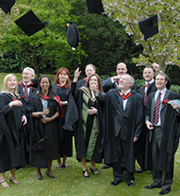
The President’s Day & Graduation Ceremony has been held annually at Hunton Park (Hertfordshire) – a delightful Queen Anne Mansion set in parkland. However this was of necessity cancelled due to the Covid 19 pandemic and has not yet been re-introduced. It is hoped to reinstate a ceremony in due course.
THE PRESIDENTS CITATION
A citation may be awarded where a student has demonstrated an outstanding performance throughout the course. Such awards are occasional.
JOHN A HARWOOD CITATION
This Citation is awarded in memory of the illustrious Founder and Past President to the student who has made outstanding progress during the first year of his/her course.
OTHER INFORMATION
MENTORS will be appropriately qualified and experienced persons
STUDY ASSISTANCE (via e-mail): Anytime with the assigned Mentor – or with TTS Office
Our academic courses are focused on serious Candidates who respect a disciplined educational structure.
Course completion dates are given as a guide without guarantee because as the science of pure trichology advances any changes / additions to the syllabus implemented by the College will extend the course and period of study. This will inevitably create modest increments in costs to the Candidate.
Candidates should make regular reference to this page throughout their period of study.
The Society has since its inception (1999) provided a continuous programme of ongoing professional advancement e.g. lectures, proof reading expert witness reports, one-to-one tutorial days with our leading mentors and practice management requests from members
This overview represents the updated course details as at 14-01-2022.
WE TRUST THIS OVERVIEW HAS BEEN INFORMATIVE.
PLEASE ADDRESS ANY QUESTIONS TO THE COLLEGE REGISTRAR